
Ever wonder how a few teenagers goofing around after school ended up sparking one of the most recognizable countercultural movements in modern history? It sounds almost too random to be real, but that’s exactly where the origin of 420 begins. What started as a treasure hunt for an abandoned crop turned into a code word, then a cultural symbol, and eventually a rallying cry for hemp legalization, cannabinoid education, and cannabis hemp reform worldwide.
At JK Distro, we’ve been part of this evolving story since 2019, supporting the values of transparency, education, and legal access to hemp-derived cannabinoids. Explore our THCA wholesale options to find premium lab-tested hemp products for your routine. We understand that 420 isn’t just a number, it’s a legacy built on curiosity, community, and the push for legal access to premium hemp-derived cannabinoids like THCA, Delta-8, and Delta-9 THC. We support organizations like the National Hemp Litigation Fund because we believe in protecting the future that 420 culture helped create.
In this piece, we’ll walk you through the real 420 history, from the high school hallways of San Rafael to worldwide recognition, and how it continues to shape today’s hemp industry and consumer culture.
The history of 420 begins in the fall of 1971 at San Rafael High School in San Rafael, California. Five students, Steve Capper, Dave Reddix, Jeffrey Noel, Larry Schwartz, and Mark Gravich, called themselves “the Waldos” because they liked to hang out by a wall outside the school. They weren’t activists or industry insiders. They were just regular kids who heard about a U.S. Coast Guard member who allegedly abandoned a cannabis hemp crop in the nearby Point Reyes area.
The Waldos decided to search for the crop. They agreed to meet after school at 4:20 p.m. by the campus statue of chemist Louis Pasteur. Their shorthand for the meetup? “420 Louis.” Eventually, they shortened it to just “420.” They’d pile into a car, pass around joints, and drive out to Point Reyes looking for the legendary patch. They never found it, but the code stuck.
What began as a practical time reference became their inside joke, then their group identity. They used “420” to talk about cannabis hemp-related plans without drawing attention from parents or teachers. It was innocent, playful, and rooted in adventure, not politics or rebellion. But over time, that simple phrase would become shorthand for an entire movement around cannabinoid culture and hemp advocacy.

The Waldos weren’t outliers or outcasts. They were athletes, students, and friends navigating typical teenage life in early 1970s California. But they also had access to something rare: a direct connection to the Grateful Dead scene through family ties and local culture.
Dave Reddix’s older brother managed a Grateful Dead side project, and the band rehearsed in Marin County. This proximity meant the Waldos were plugged into one of the most influential music and cultural movements of the era. Their slang didn’t stay confined to their friend group; it leaked into the Dead’s inner circle, road crew, and fanbase. That’s how a high school joke became part of the lexicon that would eventually define global cannabis hemp culture.
The Waldos continued their search for weeks, sometimes months. Even though they never found the crop, the ritual itself became more important than the destination. Meeting at 4:20 p.m., driving through the countryside, and bonding over a shared mission created a tradition that outlasted the treasure hunt. That sense of community, curiosity, and shared experience is what made 420 history so enduring.
If the Waldos planted the seed, the Grateful Dead watered it and helped it grow into something much bigger. The band’s touring lifestyle, countercultural ethos, and massive fanbase turned a local phrase into an international phenomenon.
Members of the Grateful Dead’s road crew picked up “420” from the Waldos and began using it backstage and on tour. Deadheads, the band’s fiercely loyal fans, spread the term from show to show, city to city, and eventually country to country. Flyers circulated at concerts in the early 1990s explaining the origin of 420 and encouraging fans to gather and celebrate cannabis hemp culture on April 20th at 4:20 p.m.
The Grateful Dead wasn’t just a band; it was a movement. Their tours brought together people from all walks of life who shared values around freedom, exploration, and alternative lifestyles. That environment made it easy for slang like “420” to spread organically. By the mid-1990s, the phrase had been adopted by other music scenes, including hip-hop, reggae, and electronic music, further cementing its place in global cannabis hemp culture.
By the late 1990s and early 2000s, the origin of 420 was no longer a secret. High Times magazine published articles about the Waldos, and media outlets began covering the story. What was once underground slang had become part of mainstream vocabulary.
The internet accelerated the spread of 420 history. Forums, social media, and cannabis hemp advocacy websites helped educate new generations about the phrase’s roots. April 20th became an unofficial holiday, marked by events, rallies, and gatherings worldwide. It wasn’t just about celebrating; it was about visibility, community, and pushing for legal reform.
As cannabis hemp legalization gained traction, brands in the wellness, lifestyle, and eventually hemp industries began embracing 420 in their marketing. Product drops, sales events, and limited-edition releases became common on April 20th. Companies like JK Distro recognize that 420 isn’t just a marketing opportunity; it’s a cultural touchstone that connects consumers, advocates, and businesses around shared values of transparency, education, and legal access to hemp-derived cannabinoids.
The passage of the 2018 Farm Bill was a turning point in 420 history. The legislation removed hemp, defined as cannabis with no more than 0.3% delta-9 THC on a dry-weight basis, from the federal Controlled Substances Act definition of marijuana. This opened the door for a new generation of consumers to engage with cannabis hemp culture within a legal framework, though the regulatory status of specific cannabinoid products continues to evolve through federal guidance and state-level policy.
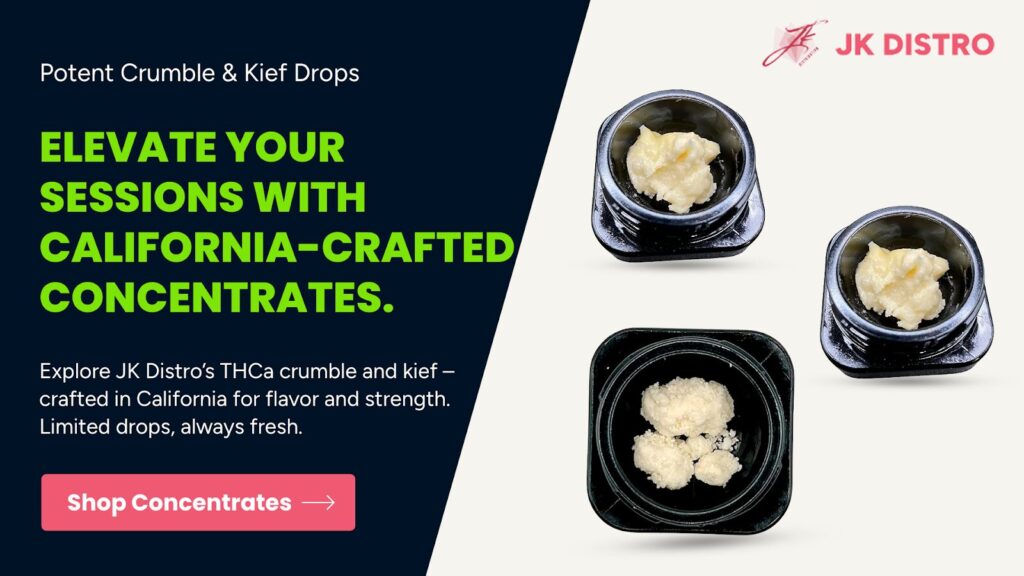
THCA, tetrahydrocannabinolic acid, is a non-psychoactive cannabinoid found in raw cannabis hemp that converts to Delta-9 THC when heated through a process called decarboxylation. Products containing THCA have become increasingly popular in the hemp market. Brands like JK Distro offer lab-tested THCA flowers and concentrates that allow consumers to explore cannabinoids within compliant frameworks, though buyers should be aware that legality can vary by jurisdiction and product type. Browse our THCA hemp flower collection to find the right option for your needs.
Today’s hemp consumers often discover 420 culture through product packaging, brand storytelling, and community events. The history of 420 serves as a reminder of how far the movement has come, from five teenagers hunting for a hidden crop to a legal, transparent industry where consumers can access hemp-derived cannabinoids with Certificates of Analysis and nationwide shipping.
420 didn’t stay in San Rafael. As the date spread globally, it carried legal and social weight that governments, communities, and industries are still reckoning with today. Here’s where things stand.
Public 420 gatherings, from Hyde Park in London to Civic Center Park in Denver, have consistently pushed cannabis and hemp legalization onto legislative agendas. What began as countercultural meetups are now organized events that draw media coverage and put pressure on lawmakers to address outdated drug policies.
420’s cultural reach far exceeds its legal reach. In many countries where 420 is celebrated openly, cannabis and even hemp remain criminalized. This disconnect creates real risk for consumers who conflate cultural acceptance with legal protection; they are not the same thing.
As 420’s mainstream visibility has softened public perception around cannabis broadly, hemp has ridden that wave. Reduced stigma has opened retail channels, loosened banking restrictions for hemp businesses, and made it easier for wholesale distributors to operate transparently.
Platforms have alternated between embracing and suppressing 420 content. For hemp brands, this inconsistency creates marketing challenges. Compliant, lab-tested products still face the same algorithmic restrictions as controlled substances, making organic reach difficult despite operating fully within federal law.
State-level legislation continues to evolve rapidly. Some states have moved to restrict high-THCA hemp products regardless of federal compliance status. For buyers and distributors, 420’s growing visibility has inadvertently accelerated regulatory scrutiny, making compliance documentation more important than ever.
420 has outgrown its origin story. What started as a meeting time between five California teenagers is now a commercial moment, a cultural checkpoint, and for hemp buyers specifically, one of the most active purchasing windows of the year. Here’s what it actually means if you’re buying or selling hemp today.
Much like Black Friday for retail, April 20th now triggers significant spikes in hemp and cannabis purchasing. Distributors run limited-time deals, bulk pricing drops, and new strains drop specifically around this window. For wholesale buyers, it’s a legitimate procurement opportunity worth planning around.
Today’s hemp consumer isn’t guessing. They’re reading COAs, comparing THCA percentages, and cross-referencing lab results before checkout. 420 in 2026 means buyers show up informed, and brands that can’t back their products with transparent testing get skipped.
With THCA flower delivering comparable experiences to traditional cannabis in states where it remains federally compliant, hemp has secured its seat at the 420 table. Buyers who once defaulted to dispensaries are now sourcing directly from wholesale hemp distributors for better pricing and variety. Explore our THCA concentrate bulk options if you’re looking to stock up with quality hemp products.
420 gives hemp brands a legitimate, culturally embedded reason to engage their audience, through education, promotions, or new product launches. For buyers, that means more options, more competition among suppliers, and ultimately better value at the point of purchase.

No. This is a popular myth, but the origin of 420 has nothing to do with law enforcement radio codes. The real history of 420 dates back to five California high school students who used “420” as shorthand for their 4:20 p.m. meetup time in 1971.
Hip-hop artists adopted 420 as a cultural reference in the 1990s and 2000s, using it in lyrics and album art. This helped bring the phrase into mainstream consciousness and connected cannabis hemp culture with broader music and lifestyle movements.
420 gatherings and events have often doubled as advocacy moments for cannabis hemp legalization. The visibility and community around 420 helped normalize public discussions of reform, contributing to shifts in policy and public opinion.
Brands use 420 because it resonates with consumers who value authenticity, community, and the cultural roots of cannabis hemp. It’s also a way to connect with customers during one of the industry’s most recognized moments each year, April 20th.
Support businesses that honor 420 history by prioritizing transparency, advocacy, and quality. Look for companies that fund hemp policy reform, provide lab-tested products, and engage with the community in meaningful ways.
While 420 celebrates cannabis hemp culture broadly, 710 (which spells “OIL” upside down) is specifically focused on concentrates like live rosin, diamonds, and extracts. Both have roots in community slang but represent different aspects of cannabinoid culture.


Support cannabis rights with a donation. Your contribution funds legal challenges, awareness campaigns, and advocacy to keep cannabis accessible and legal. Stand up for our rights and the future of cannabis in Nationwide. Click for More info on the Hemp Litigation Fund.

Are you 21 or Older?
Please verify that you are 21 years of age or older to enter this site.
NO MINORS!